





Who Is Sculptra Suitable For? Age, Skin Quality and When It Is Not the Right Fit
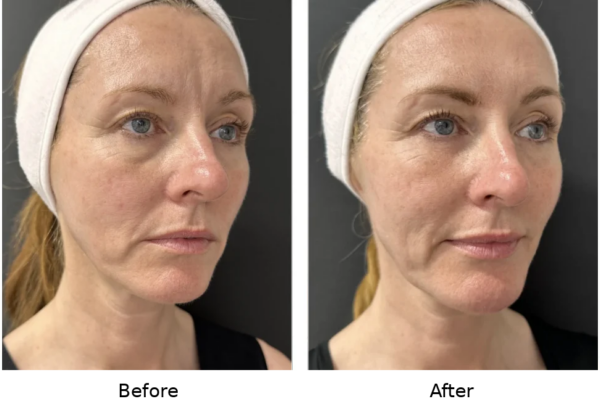
Sculptra suits patients whose main concern is structural, such as loss of firmness, thinning skin or a gradual softening of contour. It is not the right fit for anyone who needs an immediate change, or whose concern is fat distribution or muscle tone rather than skin quality.
Knowing who is suitable for Sculptra starts with understanding what the treatment is designed to do. Sculptra® is a collagen biostimulator, so it works best where the skin has lost some of its own support and has the capacity to rebuild it. This guide explains how age, skin quality and individual circumstances shape that decision, and when another approach is the better choice.
What Sculptra is designed to treat
Sculptra contains poly-L-lactic acid (PLLA), which acts as a scaffold in the deep dermis and prompts fibroblast cells to produce more collagen. The change is structural rather than volumetric, and it develops over months rather than days.
For that reason, Sculptra is most often considered for diffuse changes rather than a single hollow. Typical concerns include loss of firmness, thinning skin and the gradual softening of contour that can make a face look more tired than the person feels. Our page on facial volume loss describes how collagen, elastin, fat pads and bone support each contribute to these changes.
Does age matter?
There is no single age at which Sculptra becomes appropriate. Collagen-producing activity tends to decline progressively from the mid-thirties onwards, which is why many people begin to notice early structural change at around that stage. What matters more than the number is the degree of collagen loss, your anatomy and what you would like to achieve.
Suitability is therefore a clinical judgement rather than an age bracket. Two people of the same age can have very different skin quality and very different needs, which is why we confirm suitability, the number of sessions and the spacing between them only after an anatomical assessment.
Skin quality and the areas Sculptra can treat
Skin that is thinning, losing firmness or showing a crepey texture is often a good candidate, because the aim is to improve the quality of the skin itself. Sculptra is used across the face, neck, décolletage, hands and body, with each area planned using its own depth, dilution and course length.
The face, the body and the hands each have their own page. It can also help improve skin quality on the face and body after significant weight loss, including weight loss with GLP-1 medication.
When Sculptra is not the right fit
Honest advice sometimes means recommending something else. The table below sets out common situations and how we would think about each one.
| Situation | Is Sculptra a good fit? | How we would approach it |
|---|---|---|
| Diffuse volume loss, thinning skin or loss of firmness | Often suitable | A course of Sculptra, planned after assessment |
| You want an immediate change, for example before a specific date | Not ideal | Dermal fillers give immediate correction, while Sculptra builds gradually |
| Your concern is fat distribution or muscle tone | Usually not the main answer | A different approach or a combination, chosen at consultation |
| Pregnancy or breastfeeding | Not recommended | Treatment is not advised during this time |
| Active infection or inflammation in the area | Not suitable at that time | The area needs to be clear before treatment is considered |
| Certain autoimmune or connective tissue conditions, or a history of keloid scarring | Assessed carefully | Reviewed individually after a full medical history |
Sculptra, dermal fillers and combination plans
Sculptra and dermal fillers do different jobs. Fillers add immediate volume to a specific area, whereas Sculptra improves the structure of the skin gradually. Neither is better in every case, and some patients benefit from both.
Common pairings include dermal fillers, skin boosters and Morpheus8, planned at consultation. Where the concern is fat or muscle rather than skin quality, treatments such as Emsculpt NEO may be more relevant, and we would discuss that openly with you.
Setting realistic expectations
Sculptra is a gradual treatment, and suitability includes being comfortable with that pace. Change is generally noticeable from around six to eight weeks, builds over three to six months and, after a completed course, can last for two years or more. Results vary between individuals, and no treatment can promise a particular outcome.
The patients who tend to be most satisfied are those who value a restrained, natural result and are prepared to follow a course with the recommended aftercare. If you would prefer to see a change within days, we will say so plainly and discuss options that fit that timeline.
What happens at your consultation
Your consultation is where suitability is decided. We take a full medical history, assess your anatomy and discuss your goals and your timeline. If Sculptra is right, we explain what a course involves, which is typically two to four sessions spaced four to six weeks apart. If it is not, we say so and talk through the alternatives.
Frequently Asked Questions
Am I too young or too old for Sculptra?
There is no single age limit. Suitability depends on your skin quality, how much collagen loss is present and your anatomy, and it is confirmed at consultation.
Can Sculptra help after weight loss?
Yes. It can improve skin quality on the face and body after weight loss, including weight loss with GLP-1 medication.
Is Sculptra suitable for the hands and neck?
Yes. Sculptra is used on the neck, décolletage and hands as well as the face and body, and each area has its own protocol.
Is Sculptra better than dermal fillers?
Neither is universally better. Fillers correct immediately, while Sculptra stimulates gradual regeneration, and the right choice depends on your concern.
Who should not have Sculptra?
Treatment is not recommended during pregnancy or breastfeeding, or where there is active infection or inflammation in the area. Certain autoimmune or connective tissue conditions, and a history of keloid scarring, are assessed carefully.
Considering Treatment
If you are unsure whether Sculptra is right for you, an assessment is the clearest way to find out. At our Kensington clinic, treatment is performed by Dr Priyanka Chadha or a member of the Amer Clinic medical team, and the plan is built around your anatomy and your goals. You can book a private consultation to begin the conversation.