





Moxi Laser in London: What Does It Actually Treat
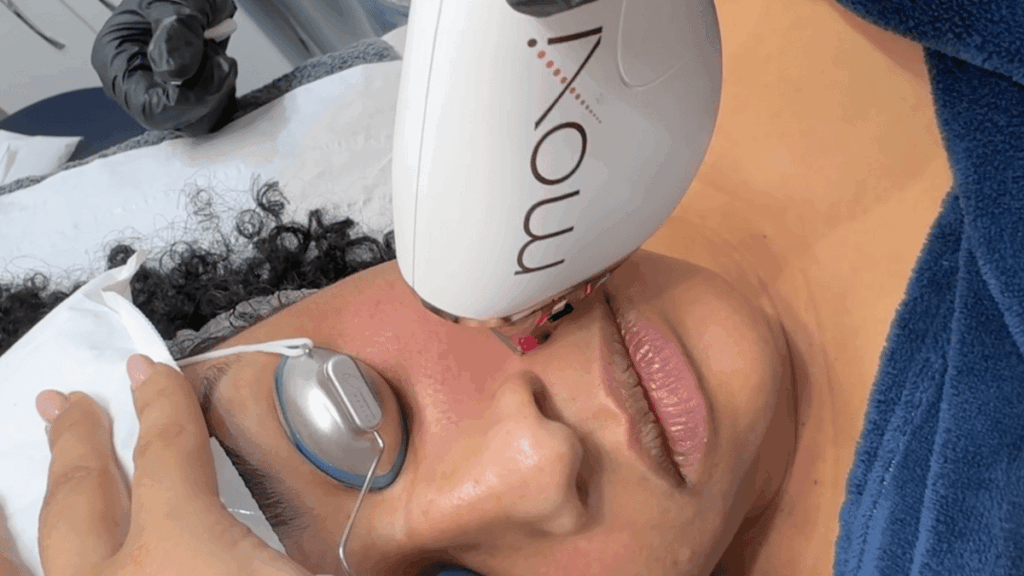
MOXI™ laser is a non-ablative fractional 1927nm laser that treats sun damage, pigmentation, uneven tone, dullness, fine lines, and early signs of photoageing across the face, neck, chest, and hands. It works by delivering microscopic columns of laser energy beneath the surface of the skin, prompting cellular renewal and fresh collagen production with minimal downtime. At Amer Clinic in Kensington, every protocol is calibrated to skin type, lifestyle, and the long-term aesthetic plan agreed in consultation.
Most patients do not present with one isolated concern. They arrive with a layered picture: pigmentation from years of unguarded sun, a softening of clarity around the cheeks, fine lines that no longer answer to skincare alone. MOXI laser sits within the Amer Clinic skin programme as a measured, clinically led correction for exactly this kind of cumulative damage.
How MOXI Laser Works
MOXI is a non-ablative fractional device, which means it heats microscopic columns within the skin without removing the outer layer. The 1927nm wavelength has a particular affinity for melanin and the upper dermis, the precise depth at which most photoageing presents. Healthy tissue is preserved between treatment zones, so the skin heals predictably and the patient retains a normal life around their sessions.
What follows is biological, not cosmetic. Damaged cells are gradually replaced, melanin clusters break down and clear, and fresh collagen is laid down beneath the surface. Across a planned course, this quiet remodelling resolves into clearer, more even, more luminous skin. The mechanism is the reason MOXI laser tends to favour patients who want refinement and clarity, rather than dramatic resurfacing.
What MOXI Laser Treats
The treatment is best understood as a clarity and quality laser. Used well, it corrects the changes that make skin look tired, weathered, or simply older than the patient feels.
Sun Damage and Photoageing
Most of what reads as facial ageing is the long shadow of ultraviolet exposure. The majority of visible facial ageing is attributable to sun exposure rather than chronological age. MOXI laser is a precise instrument for softening the residue of that exposure: diffuse pigmentation, mottled tone, the leathery surface quality that accumulates quietly over decades.
Pigmentation and Sunspots
Solar lentigines, discrete sunspots, and patchy hyperpigmentation respond well to a planned course. The fractionated pattern allows pigment to be broken down progressively, which is the more sensible approach when restraint is the goal. Melasma is treated more cautiously. It can respond, but it can also be provoked, and the decision belongs in consultation rather than in a brochure.
Uneven Tone, Dullness, and Texture
For patients whose chief complaint is that their skin no longer looks like itself, MOXI laser is one of the more dependable corrections. Accelerated turnover above and fresh collagen beneath restore a quality of light to the skin that topical regimens rarely achieve alone. The same response gradually refines pore visibility and surface irregularity, with improvements that build session over session.
Fine Lines and Preventative Care
This is not a deep wrinkle laser and presenting it as one would be a disservice. It is, however, well suited to the soft fine lines and wrinkles around the eyes, mouth, and forehead, and to patients in their late twenties and thirties seeking to maintain skin quality before significant damage sets in. A growing number of patients ask specifically about a MOXI facial London option with prevention in mind, looking for measured stimulus rather than correction.
Areas the Treatment Can Address
The face is the most common request, but photoageing rarely confines itself there. MOXI laser is suitable across:
- Full face
- Neck
- Décolletage and chest
- Hands and forearms
These are the zones that quietly betray age while the face is being protected. Patients searching for MOXI laser near me are often as concerned with chest pigmentation or the back of the hands as they are with the face itself, and a single visit can be planned to address more than one area.
What MOXI Laser Does Not Treat
A useful consultation is one that is honest about limits. MOXI laser is not intended for deep, established wrinkles, significant skin laxity, moderate to severe atrophic acne scarring, or vascular concerns such as broken capillaries and persistent redness. Where these are the dominant issues, other modalities, including advanced skin tightening protocols, are usually the better instrument. In many patients, the answer is not a single treatment but a coordinated plan, which is the work of the consultation itself.
How It Compares to Other Skin Treatments
Several modalities address overlapping skin concerns, and the right choice depends on indication, skin tone, downtime tolerance, and the broader treatment plan. The comparison below outlines how MOXI™ sits alongside other commonly considered options.
| Treatment | Primary Concern Addressed | Downtime | Skin Type Suitability | Typical Course |
| MOXI™ Laser | Pigmentation, dullness, fine lines, early ageing | 2 to 4 days mild | Suitable across most skin tones | 3 to 4 sessions |
| BBL HEROic | Pigmentation, redness, sun damage | Minimal | Best for lighter skin tones | 3 to 5 sessions |
| Lumecca IPL | Vascular concerns, sunspots, redness | Minimal | Most skin tones with care | 2 to 4 sessions |
| Microneedling | Texture, fine lines, mild scarring | 1 to 3 days | All skin types | 3 to 6 sessions |
| Morpheus8 | Laxity, deeper wrinkles, scarring | 4 to 7 days | All skin types | 1 to 3 sessions |
Where multiple modalities suit, the more useful question is not which is best, but which sequence is right for the patient’s skin, season, and longer plan.
The Treatment Journey at Amer Clinic
Every laser pathway begins with a private skin consultation. Skin type, history of sun exposure, prior treatments, current routines, and aesthetic priorities are reviewed before any protocol is recommended. A typical course is three to four sessions spaced several weeks apart, with periodic maintenance thereafter. Sessions take thirty minutes. Topical anaesthetic and cooling air keep the experience comfortable, and most patients return to normal life immediately. A mild flush and a fine sandpaper-like texture are normal for two to four days, with makeup usually reintroduced after twenty-four hours.
The full protocol, aftercare guidance, and combination options are outlined on the MOXI laser treatment page at Amer Clinic.
Frequently Asked Questions
How quickly will I see results from the MOXI laser?
Initial brightening appears within three to five days as the treated skin exfoliates. Pigmentation correction and collagen-led smoothing continue to develop across the weeks that follow, with the most considered results visible after a completed course.
Is MOXI laser safe for darker skin tones?
It is regarded as one of the safer fractional lasers across a broader range of skin tones, but individual assessment remains essential. Protocol settings are adjusted carefully to minimise the risk of post-inflammatory pigmentation, and the decision to proceed is always patient-specific.
How long do results last?
With a completed course and consistent sun protection, results typically last well beyond a year. Daily SPF, an evidence-based skincare routine, and periodic maintenance are what sustain the result over time.
Can MOXI laser be combined with injectables?
Yes, and it often is. The treatment pairs well with injectable and biostimulator protocols, although these are scheduled in a planned sequence rather than the same appointment. The order is part of the wider plan agreed in consultation.
Considering Treatment
If you are considering MOXI Laser London as part of a wider skin strategy, the first step is a private consultation. This is where the Amer Clinic medical team assesses your skin in detail, sets realistic expectations of what the treatment can and cannot achieve for you, and outlines a personalised pathway. Decisions about laser are best made within the architecture of a long-term plan, rather than as a series of isolated sessions.